
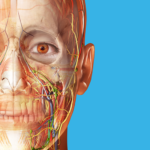









Human Anatomy Atlas 2026 is an educational medical app designed to help students and anatomy learners explore the human body in an interactive way. It provides detailed male and female 3D anatomical models that can be examined layer by layer, making it easier to understand the position and relationship between different structures. Interactive animations also demonstrate how selected body parts move and function, while quizzes and learning exercises help users review their knowledge and identify areas that need more practice.
DETAILED 3D ANATOMICAL MODELS
Human Anatomy Atlas 2026 is a useful learning resource for medical students and anyone interested in understanding human anatomy. Instead of relying only on traditional diagrams, users can explore three-dimensional models and examine body structures from different angles. Multiple layers allow you to move from larger structures to increasingly detailed anatomical areas, making it easier to study the relationships between organs, tissues, muscles, bones, and other parts of the body.
- Highly Detailed 3D Structures: Explore anatomical parts in three dimensions and understand how different structures are positioned and connected.
- Interactive Exploration: Zoom, rotate, and examine models from different viewpoints to make anatomy study more convenient and engaging.
INTERACTIVE MUSCLE AND BODY MOVEMENTS
Understanding anatomy becomes easier when you can see how different structures work together. The app uses interactive animations to demonstrate selected movements and anatomical relationships. As certain muscles and body parts move, you can observe how surrounding structures respond and coordinate. These visual demonstrations provide another way to understand anatomy beyond static illustrations.
- Explore Anatomical Characteristics: Learn about the location, connections, structure, and movement of different body parts.
- Realistic Movement Simulations: Use animations to better understand how muscles and other structures coordinate during movement.
- Visual Learning: Interactive models and animations provide an engaging way to reinforce anatomy concepts and improve recall.
EXTENSIVE ANATOMY CONTENT
The application offers multiple anatomical layers that can be explored in detail. You can move through different levels of the body to examine structures beneath the surface and investigate specific regions more closely. Depending on the area being studied, users can examine relationships between the skeleton, organs, muscles, tissues, and other anatomical structures. The ability to zoom and navigate through individual layers makes it easier to focus on the parts that matter most during study sessions.
- Explore Different Layers: Move through anatomical layers to discover structures from the surface to deeper tissues and internal components.
- Regular Content Updates: Access additional educational material and supported content as the application develops.
- 3D Models and Animations: Combine detailed visual models with animations for a more interactive and informative learning experience.
MOBILE LEARNING AND QUIZZES
Learning anatomy is more effective when you can regularly test what you have studied. Human Anatomy Atlas 2026 includes quiz-style learning resources that allow users to review anatomical concepts and check their understanding. Questions can help identify topics that require additional study, giving learners an opportunity to revisit specific structures and strengthen their knowledge.
- Easy-to-Use Interface: Navigate through anatomical models, educational content, and learning resources with a straightforward interface.
- Study Anywhere: Access anatomy learning materials on compatible smartphones and tablets for convenient study at home, in class, or while reviewing on the go.
- Knowledge Testing: Use quizzes to review important concepts and identify areas where additional practice may be useful.
Comments (0)
No comments yet. Be the first!